
Lazyboy Recliner Size Chart – Dimensions Guide
If you are shopping for a Lazyboy recliner, one of the most important things to understand is size. A recliner may look perfect in photos, but if it is too wide for your room, too deep for your space, or too tall or too shallow for your body, it can quickly become an expensive mistake. That is why a Lazyboy recliner size chart matters.
A good recliner should fit both your body and your room. It should feel supportive when sitting upright, comfortable when reclining, and practical when placed in your living room, bedroom, office, home theater, or reading corner. The right size is not just about whether you can sit in it. It is about whether you can use it comfortably every day without crowding your layout or compromising traffic flow.
This detailed guide explains how recliner dimensions work, what measurements matter most, how to estimate the right fit for your height and room size, and what to check before buying. It also includes helpful product links, sizing tips, and a mobile app that can help you compare recliner sizes more easily.
Why Recliner Size Matters So Much
People often focus on color, fabric, price, and features before thinking about dimensions. But size affects almost everything about the way a recliner performs.
If a recliner is too small, it may not support your back, shoulders, thighs, or legs properly. If it is too large, your feet may not rest naturally, your head may miss the headrest position, and the chair may dominate the room. Even if the chair itself feels comfortable, the full recline clearance may become a problem if it sits too close to a wall, coffee table, media unit, or nearby seating.
That is why understanding recliner dimensions before buying is one of the smartest things you can do.
What a Lazyboy Recliner Size Chart Usually Includes
A recliner size chart typically includes the most important dimensions you need to compare chairs properly. While exact numbers vary by model, most recliner sizing guides focus on these measurements:
- Overall width
- Overall depth
- Overall height
- Seat width
- Seat depth
- Seat height
- Fully reclined length
- Distance needed from the wall
- Recommended user height range
These numbers help answer two main questions. First, will the recliner fit you comfortably? Second, will the recliner fit your room and still function correctly when opened?
The Most Important Recliner Dimensions Explained
Overall width
This is the full width of the recliner from outer arm to outer arm. It is one of the first numbers to check if you are placing the chair in a small room, apartment, RV, office, or corner layout.
If you are comparing chairs for tighter spaces, it can help to browse small space recliner options to understand how compact recliners are typically designed.
Overall depth
This is the measurement from the front edge to the back of the chair when upright. It affects how much floor space the recliner takes up even before it is opened.
Overall height
This is the height from the floor to the top of the chair back. Taller users often need more back height and better head support, while shorter users may prefer a slightly lower overall profile if the chair still provides enough upper-body support.
Seat width
Seat width affects how roomy or snug the recliner feels. A wider seat can feel more spacious, but if it is too wide for your frame, it may not feel supportive. Seat width also matters if you like to curl up, sit cross-legged, or use a throw blanket frequently.
Seat depth
Seat depth is critical for comfort. If the seat is too deep, shorter users may struggle to rest their feet on the floor comfortably while sitting upright. If the seat is too shallow, taller users may feel under-supported through the thighs.
Seat height
Seat height affects how easy it is to get in and out of the chair. It also changes knee angle and sitting posture. This measurement becomes especially important for seniors, people with mobility issues, or anyone who prefers a chair that is easier to stand up from.
Fully reclined length
This is how much space the recliner needs when fully extended. It is essential for room planning. A recliner can fit upright but still be a poor choice if there is not enough room for it to recline properly.
Wall clearance
Some recliners need significant distance from the wall, while wall-hugger models are designed to work in tighter layouts. If you are buying for a smaller living room or apartment, this number can be the difference between a chair that works and one that becomes frustrating.

Korser Power Zero Gravity Recliner Chairs for Adults, Adjustable Electric Reclining Chair with USB&Type-C Ports, Wall Hugger Recliner for Small Spaces with Side Pocket for Living Room and Bedroom
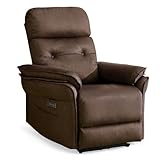
Korser Power Zero Gravity Recliner for Adults with Adjustable Electric Recline, USB & Type-C Ports, Wall-Hugger Design, and Side Pocket. Ideal for Small Spaces in Living Rooms or Bedrooms

QKFF Wall Hugger Power Recliner Chair, Zero Wall Electric Recliner Chairs with USB Port, Snowflake Velvet Space Saving Large Recliner for Living Room, RV, Home Theater
General Lazyboy Recliner Size Categories
While different models vary, most recliners can be grouped into general size categories. This kind of size chart is useful when you want a starting point before comparing exact models.
Small recliners
Small recliners are usually best for petite users, compact rooms, apartments, small bedrooms, and reading corners. These are often a good fit for people who want comfort without taking up too much floor space.
Typical range:
- Overall width: about 30 to 36 inches
- Overall depth: about 32 to 38 inches
- Overall height: about 38 to 41 inches
- Best for: shorter adults, smaller rooms, limited layouts
Medium recliners
Medium recliners are often the most versatile and tend to suit average-size adults and standard living rooms. They usually offer a balanced mix of support, comfort, and space efficiency.
Typical range:
- Overall width: about 36 to 40 inches
- Overall depth: about 36 to 40 inches
- Overall height: about 40 to 43 inches
- Best for: average-height users, most living rooms, general family use
Large recliners
Large recliners are designed for users who want a roomier seat, taller back, broader arms, or more substantial body support. These models need more floor space and should be measured carefully before buying.
Typical range:
- Overall width: about 40 to 48 inches or more
- Overall depth: about 38 to 44 inches
- Overall height: about 42 to 46 inches
- Best for: taller users, larger rooms, oversized comfort preferences
Extra-large or big and tall recliners
These recliners are built for maximum space and support. They often have wider seats, stronger frames, and more generous back dimensions.
Typical range:
- Overall width: about 45 inches and up
- Overall depth: about 40 inches and up
- Overall height: about 44 inches and up
- Best for: tall users, broad frames, larger dedicated seating spaces
If you want to compare styles and accessories that often go with larger chairs, browsing oversized recliner covers can also give you a better feel for how different recliner categories are sized.
Actual Lazyboy Recliner Size Chart
Below is a practical model-by-model Lazyboy recliner size chart using current dimensions from official product listings. This gives you a better real-world reference than broad small, medium, and large categories alone.
| Model | Type | Overall Width | Overall Depth | Overall Height | Seat Width | Seat Depth | Seat Height | Fully Extended |
|---|---|---|---|---|---|---|---|---|
| Pinnacle Rocking Recliner | Compact / Small-Medium | 33 in. | 38.5 in. | 41 in. | 19 in. | 21.5 in. | 18.5 in. | 66 in. |
| Brooks Rocking Recliner | Small-Medium | 35 in. | 37.5 in. | 40.5 in. | 21 in. | 19.5 in. | 19 in. | 66 in. |
| Rowan Rocking Recliner | Medium | 34 in. | 39 in. | 41 in. | 22.5 in. | 21 in. | 20 in. | 66 in. |
| Liam Rocking Recliner | Medium | 34 in. | 39 in. | 43 in. | 22 in. | 20 in. | 20 in. | 65 in. |
| Finley Rocking Recliner | Medium-Tall | 34 in. | 39 in. | 43 in. | 21.5 in. | 20.5 in. | 19.5 in. | 67 in. |
| Trouper Rocking Recliner | Medium-Large | 37 in. | 38 in. | 42 in. | 19.5 in. | 20.5 in. | 20 in. | 67 in. |
| Maverick Power Rocking Recliner | Large | 36 in. | 39 in. | 42 in. | 19 in. | 22 in. | 21 in. | 67 in. |
Important sizing note: Lazyboy dimensions can change depending on whether you choose a rocking recliner, wall recliner, manual version, or power version with added features such as headrest and lumbar support. Always compare the exact product page before ordering, especially if space is tight.
What this actual size chart tells you at a glance
- Pinnacle is one of the better options if you want a narrower recliner footprint
- Brooks is compact overall and a good fit for smaller rooms
- Rowan and Liam offer a roomier seat width without becoming oversized
- Finley gives you more back height, which can work well for taller users
- Trouper takes up more width and works better in standard or larger rooms
- Maverick is a larger-scale recliner with a taller seat height and deeper seating feel
Lazyboy Recliner Size Guide by User Height
One of the easiest ways to narrow down recliner size is to start with body height. While build, leg length, posture preference, and seat firmness all matter too, height is still a useful starting point.
Users under 5 feet 4 inches
Shorter users often do better with smaller or more compact recliners. A seat that is too deep can make it hard to sit back fully while still touching the floor comfortably. A lower seat height and shallower seat depth are often more comfortable.
Users from 5 feet 4 inches to 5 feet 10 inches
Average-height users often fit best in medium recliners. This category usually offers the most balanced seating dimensions for everyday use.
Users over 5 feet 10 inches
Taller users should pay close attention to back height, seat depth, and reclined length. A large or tall-scale recliner is often a better fit for leg support and upper-back comfort.
Users with mobility concerns
If ease of standing is a priority, seat height and cushion firmness matter even more than overall dimensions. In some cases, it may be helpful to compare lift recliner chair options for accessibility-focused features.
How to Measure Your Room for a Recliner
Before buying any recliner, measure the room where it will go. Do not rely on visual estimates. Recliners almost always look smaller in product photos than they feel in a real room.
Step 1: Measure the width of the area
Check how much wall-to-wall or furniture-to-furniture width you actually have. Make sure to account for end tables, lamps, radiators, shelves, or nearby seating.
Step 2: Measure the upright depth allowance
Check how much room the recliner can take up while closed. This matters for walkways and room flow.
Step 3: Measure the full recline space
This is where many buyers make mistakes. Leave enough room for the footrest and full back recline. A chair that fits upright may still be unusable if it hits a coffee table, TV stand, wall, or another chair once opened.
Step 4: Measure doorways and hallways too
Even if the recliner fits the room, it still needs to get through your entrance, hallway, stairwell, and interior doors. Delivery clearance matters just as much as room clearance.
A basic tape measure is enough for this job, but a digital option can be handy if you measure furniture and rooms often.
How Much Space Should You Leave Around a Recliner?
As a general rule, leave enough extra room for both function and comfort. Beyond the recliner’s listed dimensions, it helps to allow breathing space around the chair so the room does not feel cramped.
- Leave walking space beside the chair whenever possible
- Do not place the front edge too close to a coffee table
- Check side clearance if the recliner has wide arms or swivels
- Always plan for full recline, not just upright placement
If you are building a cozy setup around the chair, you may also want to compare recliner side table options that work well in tighter layouts.
Why Seat Dimensions Matter More Than Many Buyers Realize
Many people focus only on the outer dimensions of the chair, but the seat dimensions can affect daily comfort even more.
A recliner may fit perfectly in your room but still feel wrong if the seat is too high, too deep, too wide, or too narrow. For example, a tall back does not automatically mean the seat depth will work for a tall user. Likewise, a compact chair may still feel roomy if the arm design is efficient and the seat shape is supportive.
If possible, compare both the external footprint and the actual sitting area before deciding.
Wall Hugger vs Standard Recliner Dimensions
If space is limited, wall-hugger recliners deserve extra attention. These models are designed so the chair moves forward as it reclines instead of needing as much rear clearance.
A standard recliner may need a more generous gap behind it, while a wall-hugger may work in a smaller room, apartment, condo, office, or bedroom. That does not always mean the chair is smaller overall, but it does mean the room planning can be easier.
If space-saving is your priority, it may help to browse wall hugger recliner styles to compare how compact recliners are marketed and measured.
Korser Power Zero Gravity Recliner Chairs for Adults, Adjustable Electric Reclining Chair with USB&Type-C Ports, Wall Hugger Recliner for Small Spaces with Side Pocket for Living Room and Bedroom
Korser Power Zero Gravity Recliner for Adults with Adjustable Electric Recline, USB & Type-C Ports, Wall-Hugger Design, and Side Pocket. Ideal for Small Spaces in Living Rooms or Bedrooms

MCombo Power Wall Hugger Recliner Chair for Small Space RV Living Room, USB & USB-C Charging Ports, Modern Rolled Arm Recliner PR630 (Dark Brown, Medium)
Manual vs Power Recliner Size Considerations
Manual recliners and power recliners can differ in more than just operation. Power models may have slightly different frame depth, motor space, or back design depending on features like headrest adjustment, lumbar support, USB ports, or lift assistance.
When comparing dimensions, pay attention to:
- Rear clearance needs
- Seat height and ease of entry
- Arm width if controls are built in
- Nearby outlet access for power models
If you are also planning around convenience features, you might want to explore power recliner with USB options to get a better sense of how feature-rich recliners are described and sized.
Best Recliner Size for Different Rooms
Living room
A medium or large recliner often works best in living rooms, depending on the overall layout. Make sure it does not block pathways or compete with the sofa visually.
Bedroom
A small or medium recliner is often a better bedroom choice, especially if floor space is shared with dressers, beds, or nightstands.
Home theater
Comfort matters most here, but width becomes critical if you want more than one recliner in a row. Cupholders, arm width, and full recline depth all matter.
Office or reading corner
Smaller recliners or wall-hugger designs often make the most sense. Pairing the chair with a recliner cover can also help keep a heavily used reading chair looking better for longer.
A Helpful App for Measuring Recliner Fit
If you want extra help comparing recliner sizes and checking whether a chair fits your room, there is a dedicated app worth looking at. Recliner Sizer & Guide on Google Play and Recliner Sizer & Guide on the App Store is designed to help users choose the right recliner based on body type, room size, and comfort preferences.
If you are deciding between several recliner sizes or trying to avoid a sizing mistake before buying, using a dedicated measurement app like this can make the process easier. It is especially helpful for people comparing room dimensions, body fit, and layout clearance at the same time.
Simple Lazyboy Recliner Size Chart Reference
Here is a general reference guide you can use as a starting point:
- Small recliner: best for petite users and compact spaces
- Medium recliner: best for average-height users and standard living rooms
- Large recliner: best for taller users and larger seating areas
- Extra-large recliner: best for big and tall comfort needs and spacious rooms
Remember that this kind of chart is a starting point, not a final decision tool. The actual best fit depends on seat depth, back height, wall clearance, room layout, and personal comfort preferences.
Common Buying Mistakes to Avoid
- Checking only width and ignoring reclined length
- Ignoring seat depth and seat height
- Assuming all wall-hugger recliners are small
- Forgetting to measure doorways and hallways
- Choosing a chair for the room but not for your height
- Buying based only on photos without reviewing dimensions carefully
Avoiding these mistakes can save you from returns, delivery issues, and daily discomfort.
Final Thoughts
A Lazyboy recliner size chart is about much more than width and height. The best recliner is the one that fits your body naturally, works in your space comfortably, and gives you enough clearance to recline without stress. Before buying, focus on the full picture: overall dimensions, seat dimensions, reclined size, wall clearance, and how the chair matches your body height and room layout.
If you are still comparing sizes, start with your height, then measure your room, and then compare small, medium, large, and wall-hugger options carefully. Taking a few extra minutes to measure now can save you from buying the wrong chair.
For extra planning help, use a tape measure, compare wall hugger recliner and small space recliner options, and consider using the Recliner Sizer & Guide app for Android or the Recliner Sizer & Guide app for iPhone and iPad to check sizing more confidently.

ttmagic Universal Heavy-Duty Metal Sofa Chair Recliner Release Pull Handle Replacement Parts, Fits Ashley, Lazy Boy and Most Recliner Brands, 3.5" x 3" Handle Size
$13.99 (as of April 3, 2026 20:25 GMT -05:00 - More infoProduct prices and availability are accurate as of the date/time indicated and are subject to change. Any price and availability information displayed on [relevant Amazon Site(s), as applicable] at the time of purchase will apply to the purchase of this product.)
EDO Metal Recliner Handle Replacement Parts with Cable, Universal Sofa Chair Couch Release Lever Pull Handle, Fits Ashley and Major Recliner Brands Manufacturers, Exposed Cable Length 4.7"
25% Off
ttmagic Sofa Chair Recliner Release Pull Handle 3" by 3.5" Replacement Parts with Cable, Fits Ashley Lazy Boy and Most Recliner Brands Couch Sofa Chair Furniture, Exposed Cable Length 4.9"
28% Off