OEM vs Aftermarket Lazyboy Parts: Which Is Better?
If your Lazyboy recliner, loveseat, sofa, or sectional needs repair, one of the biggest decisions you will face is whether to buy OEM parts or aftermarket parts. At first glance, the difference may seem simple. One is made for the brand, and the other is a replacement made by a third party. But once you start shopping for handles, cables, springs, motors, switches, transformers, brackets, or recliner mechanisms, the decision becomes more important.
The wrong part can waste money, create fit problems, shorten the life of the repair, or even make the furniture less safe to use. The right part can restore comfort, extend the life of your recliner, and save you from replacing the entire chair.
This guide explains what OEM and aftermarket Lazyboy parts are, how they differ, which one is usually better for specific repairs, and how to decide what makes the most sense for your budget, furniture model, and repair goals.
What OEM Lazyboy Parts Mean
OEM stands for original equipment manufacturer. In simple terms, OEM parts are original-style parts made for the furniture brand or made to the same specifications as the parts that came with the chair when it was new.
When people shop for OEM Lazyboy parts, they usually want the closest possible match to the original component in terms of size, fit, materials, mounting points, and function. This is especially important for model-specific repairs where exact compatibility matters.
OEM parts are often preferred when the furniture is still under warranty, when the repair is structural or electrical, or when the owner wants to preserve the original performance and feel of the chair.

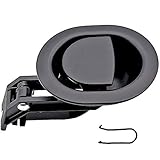
ttmagic Metal Recliner Handle Replacement Parts with Cable, Universal Recliner Sofa Chair Couch Release Lever Pull Handle, Fits Ashley and Major Recliner Brands, Exposed Cable Length 4.9“
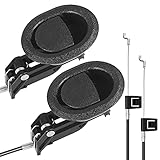
Baridwon Recliner Replacement Parts with Pull Handle and Release Cable (2-Sets), Repair Recliner Mechanism Parts Compatible with Most Furniture of Recliner Sofa Couch Chair
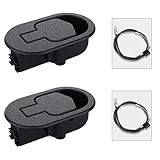
Baridwon 2 Set Recliner Replacement Parts, Durable Recliner Release Pull Handle with Recliner Pull Cable, Repair Replacement Parts Compatible with Most Furniture of Recliner Chair Sofa Couch
What Aftermarket Lazyboy Parts Mean
Aftermarket parts are replacement parts made by third-party manufacturers rather than the original furniture brand. These parts are often designed to fit multiple recliner brands or a wide range of recliner models.
In many cases, aftermarket parts are described as universal, heavy-duty, compatible, or replacement-style components. Some are very good. Some are only acceptable for simple repairs. Others may not fit properly at all.
That is why the category is broad. Aftermarket does not automatically mean bad, and OEM does not automatically mean perfect for every situation. The better choice depends on the part you need and how exact the repair must be.
The Main Difference Between OEM and Aftermarket Recliner Parts
The biggest difference is precision.
OEM parts are usually chosen because they are intended to match the original furniture more closely. Aftermarket parts are usually chosen because they are easier to find, cheaper, or available in universal sizes.
The tradeoff usually comes down to these factors:
- Exact fit
- Price
- Availability
- Durability
- Ease of installation
- Risk of compatibility issues
If the part is simple and fairly standardized, aftermarket can work very well. If the part is model-specific, hidden inside the mechanism, or tied to safety and electrical function, OEM often has the advantage.
When OEM Lazyboy Parts Are Usually Better
There are situations where OEM parts are clearly the safer and smarter option.
1. When exact fit matters
Some recliner parts need to line up precisely with brackets, bolt holes, cable lengths, lever positions, or motor connectors. If the part is even slightly off, the recliner may not open properly, close correctly, or feel right during use.
This is especially true for model-specific recliner mechanisms, brackets, and powered components.
2. When the recliner is still under warranty
If your chair is still covered under a store or manufacturer warranty, using a non-original part may complicate future service. In that situation, sticking to OEM-style replacement parts is usually the safer decision.
3. When the repair involves power components
Motors, transformers, control boxes, power switches, and electrical connectors are areas where compatibility matters more. Even if an aftermarket part looks similar, connector type, voltage, mounting layout, or wiring may differ.
If you are troubleshooting powered components, it can still help to browse comparable products like a recliner power supply transformer or a recliner power switch so you understand the different styles and connector types before buying.
4. When comfort and original feel matter
Some parts affect more than simple function. They affect how the recliner feels during everyday use. An OEM-style tension spring, release assembly, or mechanism may preserve the original motion and support more accurately than a generic substitute.
When Aftermarket Lazyboy Parts Can Be a Good Choice
Aftermarket parts can be a very practical option in the right situations.
1. When the part is simple and standardized
Some recliner parts are common across many brands. This includes many release handles, cables, springs, and some switches. In these cases, a properly measured aftermarket replacement can work just as well as the original.
For example, many people successfully repair a broken handle or snapped release cable using a recliner handle replacement or a recliner replacement cable without needing an exact brand-specific part.
2. When OEM parts are hard to find
Older recliners often become difficult to repair because exact original parts may be discontinued, backordered, or unavailable locally. In that case, a high-quality aftermarket replacement may be the only realistic option.
3. When budget matters
Aftermarket parts are often less expensive than OEM parts. If the chair is older and you simply want to restore usable function without spending too much, aftermarket can make good financial sense.
4. When you want a heavy-duty replacement
Some aftermarket manufacturers advertise stronger materials, reinforced metal components, or universal heavy-duty construction. While quality varies, some aftermarket parts are actually more robust than the original part they replace.
ttmagic Metal Recliner Handle Replacement Parts with Cable, Universal Recliner Sofa Chair Couch Release Lever Pull Handle, Fits Ashley and Major Recliner Brands, Exposed Cable Length 4.9“
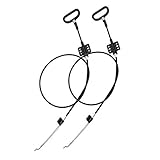
2 Pieces Recliner Release Cable Replacement D-Ring Pull Handle, Exposed Length 4.75" with S Tip
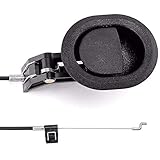
ttmagic Sofa Chair Recliner Release Pull Handle 3" by 3.5" Replacement Parts with Cable, Fits Ashley Lazy Boy and Most Recliner Brands Couch Sofa Chair Furniture, Exposed Cable Length 4.9"
OEM vs Aftermarket Lazyboy Parts: Side-by-Side Comparison
| Factor | OEM Parts | Aftermarket Parts |
|---|---|---|
| Fit | Usually closer to exact original fit | Can vary from exact to universal |
| Price | Usually higher | Usually lower |
| Availability | Can be limited for older models | Often easier to find online |
| Installation | Often easier if truly model-matched | May require measuring and adjustment |
| Durability | Often dependable and consistent | Ranges from poor to excellent |
| Electrical compatibility | Usually safer for powered furniture | Needs careful checking |
| Best use case | Complex, model-specific, or warranty repairs | Simple, common, or budget-friendly repairs |
Which Lazyboy Parts Are Usually Safe to Buy Aftermarket?
In many cases, the following parts are commonly available in aftermarket form and can work well if the measurements and connector styles match:
- Release handles
- Release cables
- Tension springs
- Some universal power switches
- Some transformer or adapter replacements with matching specs
- Plastic hand controls for certain standard motion systems
That does not mean every universal part will fit every chair. It means these categories are more likely to have workable replacements compared to highly model-specific structural hardware.
If you are comparing repair items, it may help to look at recliner spring replacement options or a recliner remote hand control to see how much variation exists between connector styles and button layouts.
Which Lazyboy Parts Are Better to Buy OEM?
These parts are usually better sourced as OEM or as near-OEM replacements whenever possible:
- Complete recliner mechanisms
- Metal brackets with exact bolt patterns
- Model-specific seat or back locking hardware
- Power components with uncommon connectors
- Parts tied to lift systems or advanced motion features
- Components needed for warranty-covered repairs
If the wrong part could affect safety, alignment, stability, or electrical performance, OEM usually gives you a better margin of confidence.
How to Decide Which One Is Better for Your Repair
The easiest way to make the right choice is to ask a few practical questions.
Is the part simple or complex?
A simple handle or cable often has more replacement flexibility. A complex mechanism or powered component usually needs tighter compatibility.
Do you have the exact model information?
The more model details you have, the easier it is to compare OEM and aftermarket choices accurately. Your recliner’s identification tag can help you find the correct replacement dimensions or part style.
How old is the furniture?
If the chair is older and already out of warranty, aftermarket may make more sense financially. If it is newer or still premium in value, OEM may be worth the extra cost.
Are you repairing for long-term use or short-term function?
If you want the chair to feel as close as possible to original condition, OEM is often worth considering. If you just need to get the chair working again affordably, aftermarket can be a smart choice.
How to Avoid Buying the Wrong Replacement Part
Whether you choose OEM or aftermarket, the biggest mistake is buying based on appearance alone.
Before ordering, always check:
- Part length and width
- Connector type
- Bolt hole spacing
- Cable exposed length
- Voltage and amperage for powered parts
- Left-side vs right-side installation
- Manual vs power compatibility
Using a tape measure and taking close-up photos of the old part before removal can prevent a lot of frustration.
What About Quality? Are Aftermarket Parts Less Durable?
Not always. This depends entirely on the specific manufacturer and part type.
Some aftermarket parts are cheaply made and intended only as low-cost temporary replacements. Others are well-made, reinforced, and perform very well. The problem is that quality varies more in the aftermarket world than it usually does with OEM-style parts.
That is why reviews, measurements, materials, and photos matter. If an aftermarket part has strong fit feedback, solid metal construction, and dimensions that match your original part, it may work perfectly well.
If you are comparing basic repair items, browsing categories like heavy duty recliner handle can help you spot whether sellers are offering upgraded materials or just generic low-cost substitutes.
Are OEM Parts Always Worth the Extra Cost?
Not always.
If you are replacing a simple release handle on an older chair, paying a premium for OEM may not be necessary. But if you are replacing a motor, mechanism, lift component, or anything tied to exact fit and performance, the extra cost may be worth it.
The real question is not whether OEM is always better. The real question is whether the specific repair benefits from exact compatibility more than it benefits from lower cost.
Best Strategy for Most Lazyboy Owners
For many repairs, the smartest approach is mixed rather than all-or-nothing.
Use OEM or near-OEM parts for:
- Power systems
- Major structural hardware
- Lift chair components
- Anything with difficult alignment
Use high-quality aftermarket parts for:
- Handles
- Cables
- Springs
- Simple external replacement items
That balance often gives you the best mix of cost savings, availability, and repair success.

Swess Recliner Switching with 2 Button 5 Pin Plug for Electric Sofa Recliner Lift Chair Electric Handset Control Replacement

Tecreddy Recliner Switch with USB, 2 Button 5 Pin Round Hand Control Handset Replacement for Ashley Okin Limoss Lane Ashley Stand Lift Chair Power Recliner Sofa
When You Should Skip the Repair Entirely
Sometimes the question is not OEM versus aftermarket. Sometimes the real question is whether the chair is worth repairing at all.
You may want to reconsider the repair if:
- Multiple major parts have failed at the same time
- The frame is cracked or unstable
- The upholstery, padding, and mechanism are all heavily worn
- The cost of correct parts is approaching replacement value
In that case, putting money into even the right part may not be the best long-term decision.
Final Verdict: OEM vs Aftermarket Lazyboy Parts
So, which is better?
OEM Lazyboy parts are usually better when you need exact fit, original performance, power compatibility, warranty-safe repairs, or model-specific hardware. Aftermarket Lazyboy parts are often better when the repair is simple, the part is standardized, the original part is hard to find, or you want a more affordable solution.
For many owners, aftermarket is perfectly fine for common repairs like handles, cables, and some springs. For structural, electrical, or high-precision repairs, OEM is usually the safer choice.
The best decision comes down to the part itself, not just the label. Measure carefully, compare connector styles, check your chair model, and think about whether the repair needs exact compatibility or just reliable function.
If you are starting your search, compare options like a recliner handle replacement, a recliner replacement cable, a recliner spring replacement, or a recliner power switch and match the measurements and specs as closely as possible.
ttmagic Metal Recliner Handle Replacement Parts with Cable, Universal Recliner Sofa Chair Couch Release Lever Pull Handle, Fits Ashley and Major Recliner Brands, Exposed Cable Length 4.9“
Baridwon Recliner Replacement Parts with Pull Handle and Release Cable (2-Sets), Repair Recliner Mechanism Parts Compatible with Most Furniture of Recliner Sofa Couch Chair
Baridwon 2 Set Recliner Replacement Parts, Durable Recliner Release Pull Handle with Recliner Pull Cable, Repair Replacement Parts Compatible with Most Furniture of Recliner Chair Sofa Couch

Baridwon 2 Sets Recliner Replacement Parts - Metal Recliner Handle, Release Pull Cable Fits Ashley & Most Recliner Sofas, Exposed Cable Length 5.1 Inches
ttmagic Sofa Chair Recliner Release Pull Handle 3" by 3.5" Replacement Parts with Cable, Fits Ashley Lazy Boy and Most Recliner Brands Couch Sofa Chair Furniture, Exposed Cable Length 4.9"